

Most visual delays are not caused by rendering speed. They are caused by incomplete handoff details.
When your intake packet is solid, first drafts are usable faster and review cycles stay focused.
The minimum project packet
Send these items on every request:
- Site address (or geolocation notes if privacy is required).
- 8-15 photos covering main viewpoints.
- Approximate dimensions for critical features.
- Scope notes for what is new, removed, or preserved.
- Target timeline and bid deadline.
Intake readiness checklist
Run this check before sending files:
- Every requested feature is tagged as
new,existing, orremove. - Dimensions are included for pool edges, walls, and primary walk paths.
- Client priorities are listed in order (budget, speed, finish level).
- Your team names one revision decision owner.
Photo checklist by area
Capture images from:
- Main interior view looking into the yard.
- Primary outdoor living zone.
- Property corners and boundary edges.
- Existing structures, grade changes, and utilities.
Tip: Avoid ultra-wide distortion when possible. Straight, eye-level photos are easier to model accurately.
Top-view photo map (where to stand and where to point)
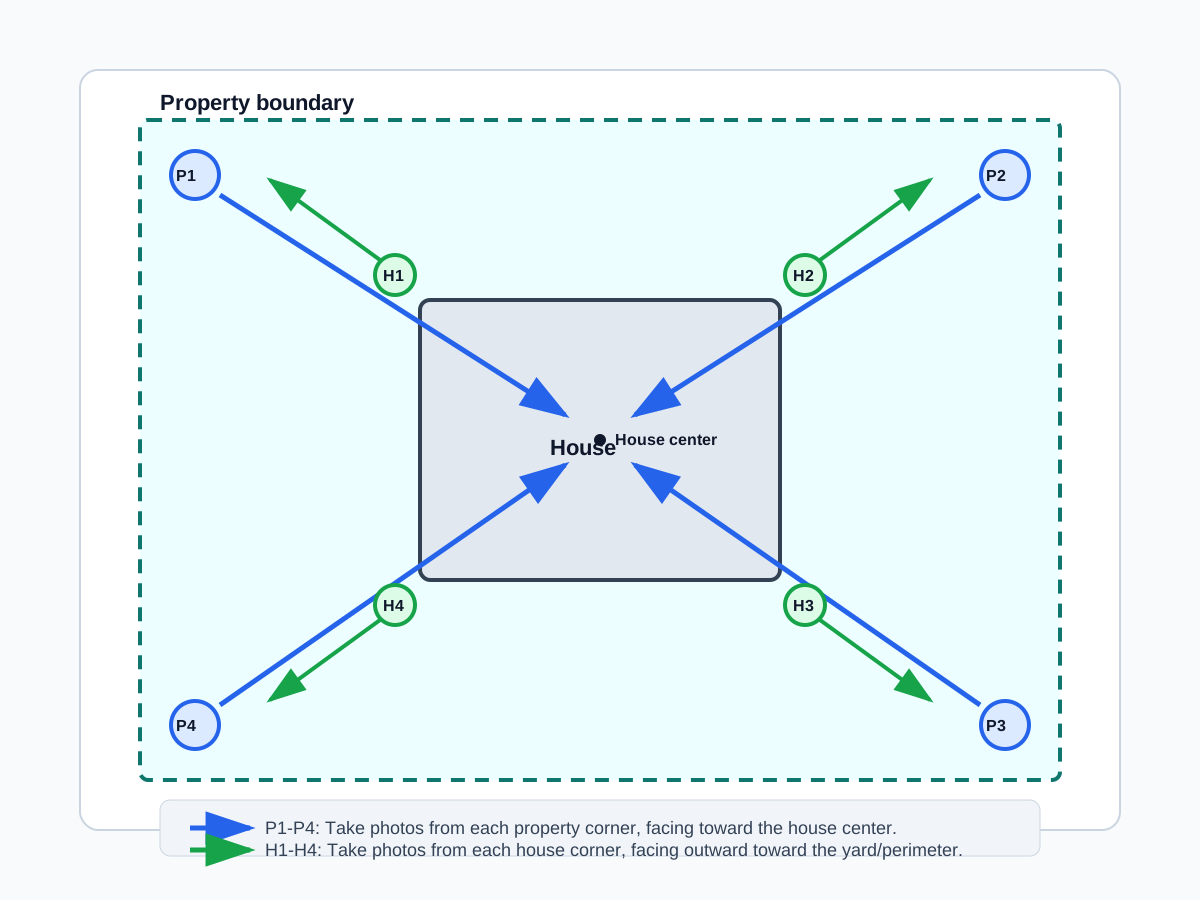
Use this map as a standard capture pattern:
- P1-P4 (property corners): stand at each property corner and point the camera toward the center of the house.
- H1-H4 (house corners): stand at each corner of the house and point the camera outward toward the yard/perimeter.
- Keep camera height roughly eye-level and hold vertical lines straight to reduce modeling distortion.
Scope details your designer needs
For pool and patio bids, include:
- Pool shape and target size range.
- Deck or paver material intent.
- Feature priorities (spa, steps, water features, kitchen, pergola).
- Lighting intent (day-only, dusk, or both).
- Any must-keep site elements.
For hardscape and grading, include:
- Wall locations and target heights.
- Drainage direction requirements.
- Access constraints for construction staging.
Example scope note format
Use short bullet lines like these in your brief:
- "Keep existing oak tree and shift patio edge 3 feet east."
- "Add two lighting tiers: base safety and premium entertaining."
- "Model retaining wall at 30-36 inch target height for permit review."
Revision rules that keep projects moving
Set these expectations before first draft:
- Consolidate team feedback into one revision document.
- Prioritize structural edits before material swaps.
- Limit each round to decision-ready changes.
This prevents endless "small tweaks" that delay approvals.
Quick handoff template
Copy this into your internal project brief:
- Project type:
- Bid deadline:
- Site photos attached:
- Dimensions and elevations:
- Materials and options:
- Must-have features:
- Revision decision owner:
Related resources
- How the process works
- Pricing and scope expectations
- Service pages for scoped deliverables
- Contractor case studies
- Recent examples
A good checklist protects both speed and quality. Use it on every job and your visuals become a reliable sales asset instead of a one-off task.